

OVERVIEW
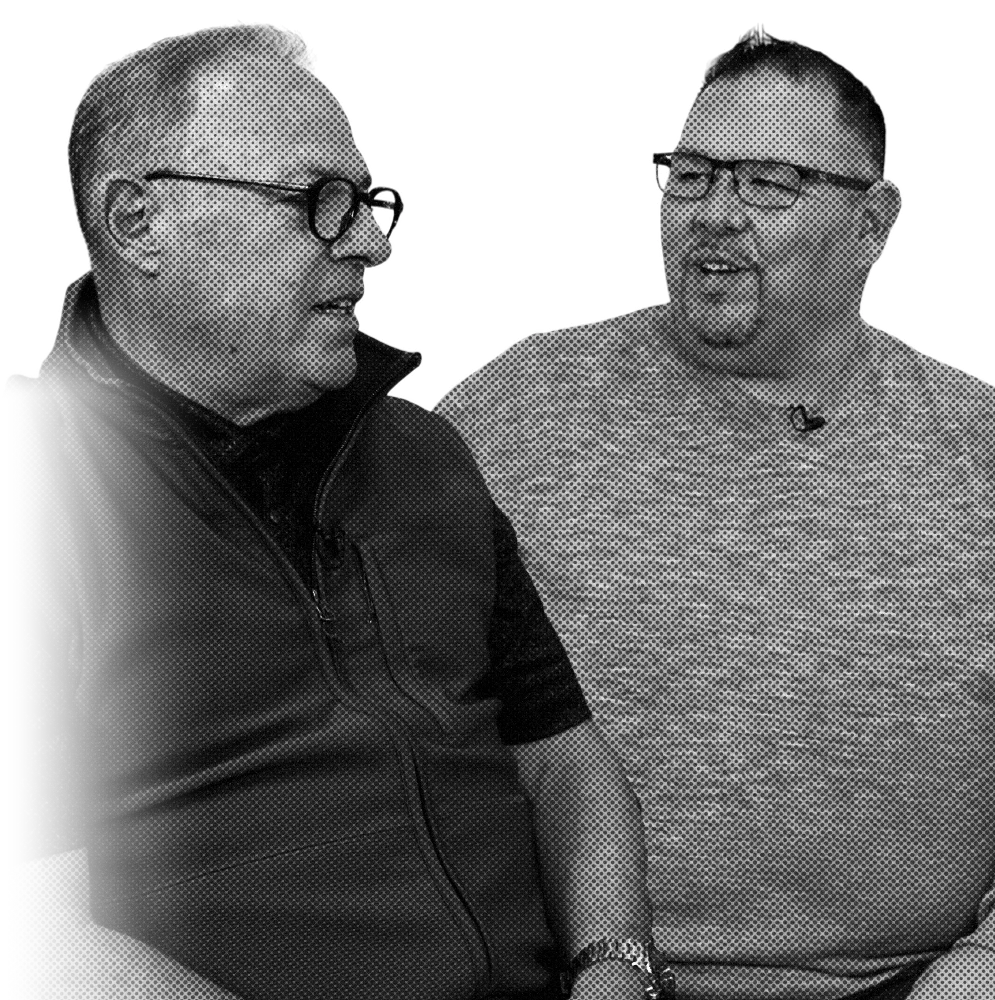
Chuck Colmenero and Santi Alejo left a multibillion-dollar PEO to start Personna Employment Solutions in June 2022, heading into an expected recession. Recorded live at ASA Staffing World in Denver, this episode of The Growth Game covers how they planned for two years, lined up funding from day one, cut a 2.5-hour application to 15 minutes, and built a firm that treats a 100% fill rate as the standard.
Key takeaways
- Hope is not a plan. Chuck and Santi planned for about two years before launching Personna, and they still do strategic planning every year.
- Line up funding before you launch. Chuck knew that weekly payrolls mean growth can outstrip cash flow fast, so a funding source was part of the plan from day one.
- Lead with technology. No paper anywhere: an electronic application that flows into assignments and payroll, with direct deposit. Their application went from about 2.5 hours to 15 minutes.
- Nine out of ten is a defect. Personna tells every new employee that filling nine seats on an order for ten is a failure, a zero-defects standard Chuck brought from lean manufacturing.
- Find the hidden labor pool. Instead of accepting that there’s nobody out there, they built a mobile-first application process and a following big enough that their database now holds 300,000 people.
Chapters
Click to jump
- 00:00 Live from ASA Staffing World in Denver
- 00:27 How Chuck and Santi got into staffing
- 02:26 “Where people matter”: the mission behind Personna Employment Solutions
- 04:09 Spotting the opportunity and leaving a $7.5B corporation
- 06:34 Planning the launch: “hope is not a plan”
- 07:35 Two years of planning and lining up a funding source
- 09:02 Entering the market as the technology leader
- 10:24 Cutting the application from 2.5 hours to 15 minutes
- 12:18 Filling 100% of seats: a zero-defects philosophy
- 13:49 Finding the hidden labor pool
- 15:07 What’s next: the five-year vision
- 16:50 Closing
THE SCOOP
00:27
How did Chuck and Santi get into staffing?
Chuck first bought temporary staffing as the CEO of a manufacturing company, to cover seasonal labor shortages. He later joined Barrett Business Services as an area manager, took over the Yakima operation in 2017, and restructured the branch. Santi was the one person he kept. “I saw talent,” Chuck says, and Santi became his staffing manager. Together they grew it into Barrett’s second-largest staffing operation in the U.S.
Santi came in through HR. His degree is in HR, he started as a recruiter, and he has been hiring people his whole career.
04:09
Why did they leave Barrett to start their own firm?
Chuck saw an operation that was very manual, with poor information flow and weak communication with clients. He wrote a strategic plan to fix it and took it to the CEO, who turned it down. Staffing was a small part of a large PEO, and Chuck says the company was constraining them so much they couldn’t compete. So he and Santi started talking about a business model of their own.
07:35
How did they plan the launch?
Slowly and on purpose. They started planning about two years before launch, researching the industry and the vendors that serve it. Chuck has a finance background, and he knew that weekly payrolls mean a growing staffing firm can outrun its cash flow quickly. So the plan covered funding as well as operations and software: how to make sure the business would be financially supported as it grew.
“Hope isn't a plan.” — Chuck Colmenero, 07:06
09:02
What does it mean to launch as the technology leader?
For Personna, it meant no paper. Applicants apply electronically, the application flows into the software, the applicant becomes an assignment, and the assignment flows into payroll. Everyone is paid by direct deposit, even in Oregon, where Chuck notes it can’t be mandated. Employees get their pay stubs and assignments on their phones in one app.
They also built for the Hispanic workforce in their market. People told them those applicants would never apply on a smartphone. Chuck disagreed, and Santi says the result was an application that went from about 2.5 hours to 15 minutes, so candidates spend their time at work instead of in the office.
12:18
Why do they hold themselves to a 100% fill rate?
Because a partial fill doesn’t solve the client’s problem. Chuck’s example is a production manager who needs ten people and gets five: now they have to figure out how to get the work done with five fewer. Coming from lean manufacturing, he treats an unfilled seat as a defect, and every new employee hears that nine out of ten is a complete failure.
13:49
Where do they find enough workers to fill every seat?
Santi points to proprietary sourcing methods, “marketplaces within marketplaces,” and a big following. He says it’s not unusual for their job posts to be seen by more than 100,000 people, and that candidates sometimes come from California, Idaho and Oregon to follow the work. Chuck sums it up: everyone says there’s nobody out there, but they’ve figured out how to find the hidden labor pool.
“You don't go to the store and buy 90% of the loaf of bread.” — Santi Alejo, 13:49
15:07
What’s the five-year goal for Personna?
Chuck wants Personna recognized as one of the leading staffing companies in the industry, with profitable growth that keeps creating opportunities for their internal team. Santi puts a number on it: if they aren’t at $100 million within five years, he’d consider it a failure. He also wants to take the company’s promise, solving the people puzzle, well beyond Washington and Oregon.

Full transcript
Lightly edited for names and terms.
00:00 · Live from ASA Staffing World in Denver
Paul 00:07 Welcome to another edition of the Growth Game Podcast. I'm your host, Paul DeLuca. We are live from Denver at ASA Staffing World. We're happy to have Chuck and Santi with us today. So nice to have you both from Personna. How did you get in the staffing business?
00:27 · How Chuck and Santi got into staffing
Chuck 00:27 That's a loaded question. Yeah. Take it. Well, um, I used to be a CEO of a manufacturing company, so I hired temporary staffing there when we had seasonal labor shortages. Later on in my career, I was recruited by Barrett Business Services and went on board as one of their area managers. As a decentralized corporation, I managed the P&L for our area, and our area was originally, um, a staffing branch.
Even though they're a $7.5 billion publicly traded PEO. They did a little bit of staffing nationally. Got it. So I took over the branches and we had a staffing element. So I decided to jump in and see if we can grow that. Actually, I grew it as a growth as a profit anchor because the PEO business, until you get a certain amount of traction, you don't make any money.
Right. And so I wanted to develop that as a profit anchor. And I took over Yakima in 2017. And that's when I met Santiago. And, uh, a funny story. He's the only one I didn't fire. I restructured the branch. I'm a fixer. And, uh, I saw talent, and, uh, he ultimately became my staffing manager. And we grew the second largest staffing business in the United States for Barrett.
So that was the introduction.
Paul 01:46 To that beautiful where the bromance commenced. I love that. So that's how you fell into it. And what about you, Santi? How did you get into it? How were you attracted to it?
Santi 01:55 Yeah, I mean, I was. My background, my career, or my degree is in HR. So I mean, there's this administration in HR. So naturally just hiring people, you know, doing that pretty much my whole career. And then, you know, starting over here, you know as a recruiter it's getting into it and you know, trying to find people. Yeah.
Paul 02:16 You mentioned to me that even as you grew up, that you saw what staffing can do to affect people's lives. And was that a big part of what attracted you to being in HR?
02:26 · “Where people matter”: the mission behind Personna Employment Solutions
Santi 02:26 Yeah. The reason why we, you know, the reason why we love what we do is because, I mean, our tagline is where people matter, right? So we have to live that we have to live that breathe, that the people are the foundation of what everything that we that we do. Without those people, we don't we there's there's no Personna there.
Right. So when somebody comes in, you know, we don't just look at them as a walking, talking dollar sign. You know, we're we're looking at them as, hey, how can we help you progress your family? I mean, it's business, right? At the same time, right? We want to be profitable and we I think we definitely are hitting that.
But, um, you know, when when people come in, you know, we're we're responsible for over 3000 people's, you know, families in their lives. And we're putting food on the table for these guys. And, um, you know, we've had little, you know, women coming. They give you the blessing. You know, thank you so much for this job or whatever it is.
And honestly, that that makes your whole day, you know, that makes your week.
Chuck 03:19 When you consider that, uh, a very high percentage of our applicants and, and people that work for us are Hispanic, uh, that have come up for the food industry in the Yakima area. Uh, we've helped bootstrap a lot of families, actually. They start out with us, we roll them into higher level positions, higher skill sets, and they they go on and leave us, but go on to better jobs.
But we gave them the start. So it's fulfilling.
Paul 03:46 It's fulfilling. And you both seem very passionate about that. And I love how you've you've been able to reach down and say, listen, I'm going to help somebody lift them up, you know, and then and you enjoy that at the same time you have a really nice business. But okay. So you're both at Barrett. You're a very large corporation.
You're looking at this. How did you spot the opportunity and say, I want to do this myself?
04:09 · Spotting the opportunity and leaving a $7.5B corporation
Chuck 04:09 So part of my background, I worked for private equity. Um, I would parachute into a company and restructure. And so immediately upon, uh, going to work for Barrett and then them asking me to take over multiple operations to fix them, it was pretty natural for me. So I saw an operation that was very manual.
Uh, information flow was very poor. Uh, we weren't serving the clients effectively. Communication was a problem. There were many opportunities I thought that we could pursue to make the business a lot better. So I wrote a plan, a strategic plan presented at the CEO, and he pooh-poohed it. So I, you know, I was like, okay, well, perhaps I could do this.
So Santi and I started talking about a business model. Um, and, uh, that that was really the genesis of it because the company was constraining us so much that we couldn't effectively compete in the marketplace. So why do it? Right. They're a PEO company. They don't really care about the staffing industry.
At least that was what we felt. And so all of these issues that we would run into continuously, I knew we could fix, but we couldn't fix it at Barrett.
Paul 05:27 Yeah, it's really interesting. And it's it's something I think it's a great takeaway for my audience. You know, my audience is made up of people like you that maybe feel like they're stuck working for somebody else, that they're not being heard or they're not able to actually affect change for the better.
Usually what I love about this business, it's so people oriented and being that your people aren't, if you want to continue to help the people around you and reach new heights. Right. And so I think that's an interesting takeaway. If you're the CEO and you've got you've got an area manager that brings you a proposal, you may want to take them, take a really serious on, on on corporate change.
Chuck 06:01 Well, that's after we grew to be the second most successful, actually the most successful branch in the country from a growth and profitability standpoint. So it was a little bit inconsistent where I, I, I was a former CEO. So as you can imagine, I, I thought, you know, if your senior leaders are coming to you with plans and they have demonstrated that they can effectively execute those plans, perhaps you should listen today.
We're very collaborative as a result. Very collaborative.
06:34 · Planning the launch: “hope is not a plan”
Paul 06:34 That's great. So excellent. Spot the opportunity you engineer your exit. Um, you decide to go into the staffing business. What kind of planning did you take? Maybe you first, what kind of planning approach to this business did you take it? How thoughtful were you before your launch?
Santi 06:55 You know, honestly. Um. You know, I'll let Chuck talk first, because I think what he has to say, he always lives by a little slogan. And he goes by and I'll let you let him say. What do you always say?
Chuck 07:06 Hope isn't a plan.
Santi 07:07 So there you go. Hope is not a plan. So that is that is one thing that I know that I've taken, you know, from Chuck, honestly. And we live by to this day. You know, we still do strategic planning every single year. We're always trying to progress. I live by a saying called evolve or evaporate. That's exactly what we do.
You know, we we we took the plan. You have to work the plan. You know, there's little things that kind of get in the way. But, you know, if you're going down the road and you don't have a plan, you know.
07:35 · Two years of planning and lining up a funding source
Chuck 07:35 We started planning probably two years prior to launch. Wow. Extensive planning. Extensive. We researched the industry. We researched, uh, a number of the vendors to the industry. I personally had a finance background early in my career, so I knew that because of the growth and staffing would come based on weekly payrolls, that growth could outstrip cash flow pretty, pretty rapidly.
So I and I knew that we would need a funding source to launch. So part of the planning wasn't just operational software, but it's also really how do we have a vehicle that we can grow and be financially supported effectively? I knew that we would need that.
Paul 08:14 That's excellent. And you've gone through rapid progress, rapid growth. You guys have done an excellent job. I know you've you've shared your numbers with me. You're you know, you're definitely in the top. You know, 5% of staffing companies that start and grow. So. Excellent job. Congrats on that. Um now but part of that really thoughtful planning prior to the launch is involved in that.
And you had mentioned that really being able to wring out some of the efficiencies was what you wanted to do. I think I think we you called yourself a a self-proclaimed fix it person. I love that you you're a fixer. So when you looked at the, um, you know, the productivity gains that you needed to make and the tech stack, how did you approach that solution?
So you'd have something to launch that you would be able to do something unique?
09:02 · Entering the market as the technology leader
Santi 09:02 Go for it.
Chuck 09:04 I don't want to be the only one talking, but, um, we we wanted to do a few things. One, we wanted to enter the markets as the technology leader. What does that mean? That means we absolutely knew we wanted to have no paper. We wanted an electronic application. We wanted the application to flow into the Ris system of the software.
We wanted the that applicant to be able to be converted into an assignment and then flow into the payroll process as well. And then we wanted to be able to effectively pay them electronically. And oh, by the way, that we don't have any paper checks. Everything is direct deposit even in Oregon where they can't mandate that.
So we've been able to convince them. The second thing was we knew that it was key to penetrate the Hispanic demographic better than our competitors. People told us they'll never be able to do an application on a smartphone, but I knew from my previous experience that they would be able to do that because Mexico was on the forefront of the cellular revolution.
Okay, so we pooh-poohed that immediately. So we went out into the market and tried to find partners that would support that philosophy. And and we did that. We were able to launch that pretty effectively.
Paul 10:23 That's excellent.
10:24 · Cutting the application from 2.5 hours to 15 minutes
Santi 10:24 Yeah. I mean, we took essentially what used to be like a two hour, 2.5 hour application process start to finish, just something that essentially takes 15 minutes. Right. So what you can do when you do that is that you help your clients, right? Because they're not they're not sitting in your office wasting time.
They're actually at work. You know, they're already in there. And Chuck's right. The Hispanic demographic are some of the smartest people that are out there. You know, they go out there. They learn, you know, business. They learn how to, you know, just from cutting the yard to running your business to, you know, cutting trees or doing whatever.
They figure it out, you know. So we were able to tell people too, and sometimes they'd come in and they'd be looking at this QR code thing like, what is that? You know, and you show them. And then all of a sudden they're teaching each other and they're showing each other, and then you got 300,000 people in your database.
You know, and it's it's insane.
Paul 11:14 That's amazing. Excellent. And did you use a vendor for that, or did you build that software, that front end software to communicate or to accept the application electronically? Did you build that yourself?
Chuck 11:25 No. We picked an act. We picked an existing vendor to the industry. Yeah.
Paul 11:29 But but you really helped execute the implementation in such a way that it worked for your set of of candidates.
Chuck 11:36 Right. And circling back, communication was another key. When we were with Barrett, communication was difficult with our clients because that even the margin reports were wrong. Okay. And so we knew that we needed to be able to more effectively communicate with our clients. And on the flip side, we wanted to be able to more effectively communicate with our employees.
So, I mean, using the systems we have today, they get their pay stubs midweek, their assignments on their phone in the app. It's all there in one spot for them. So these were things that we saw as opportunities in the marketplace that our competitors weren't utilizing.
Paul 12:16 That's great.
Chuck 12:17 Well, we exploited it.
12:18 · Filling 100% of seats: a zero-defects philosophy
Paul 12:18 Excellent. And you know, we talked a lot about kind of how you work with your labor force and kind of what your expectations are. I'd love to kind of talk about that a little bit. When you get an order for ten associates, how many are you happy with when you you you perform? What what's your performance criteria? Do you fill all ten seats.
Santi 12:44 100% every time.
Chuck 12:46 We will tell every new employee that if you get an order for ten and you fill nine, it's a complete failure. I come from the manufacturing sector, lean manufacturing, zero defects. That's a defect to me. So one of the biggest opportunities that we found in the marketplace was companies weren't filling seats.
So if you're a production manager, you need ten people and you send five. Well, does that solve their problem? No. It creates another problem for them. How am I going? How am I going to get get this done with five fewer people? And so we knew that it was incumbent upon us to be able to fill the seats effectively.
So that's really our philosophy. It's part of our DNA.
Paul 13:25 And it's amazing. I mean, that that is very unique. You know, having funded over a thousand staffing companies, that's one of the first times that I've heard that level of expectation for, for for fulfillment. Um, how do you cultivate your labor base your associates in such a way that you have access to that many candidates to be able to put them on assignment.
13:49 · Finding the hidden labor pool
Santi 13:49 Yeah. I mean, you know, we have some proprietary ways that we're we're searching for some folks. But, you know, we we have marketplaces within marketplaces and we're able to find these folks effectively. And honestly when we just have a big following, you know, and so when we're posting, it's not uncommon for our posts to see over 100,000 eyeballs, right?
You know, right from there. Sometimes we'll post and we'll get people from California or Idaho or Oregon. You know, they'll pour in. They'll want to travel or do do those things because they want to go with the jobs there. You know. So yeah, that's you know, we we have to look at it that way to fill those ten seats because our clients rely on us.
Right. You don't go to the store and buy 90% of the loaf of bread. Right. You you want the whole thing? That's the way we look at it.
Chuck 14:32 Plus, we're very. We talked about this before. Um, we very much analyzed labor pools. We know that the labor pool is the key. Okay, we've heard it a thousand times. There's nobody out there. We can't find people, blah, blah, blah. Well, we've figured out how to find the hidden labor pool, and that's why we're successful.
Paul 14:51 Excellent. Well, well. Wonderful. I mean, congrats on their amazing successes. It sounds like you're doing some great things with your your planning, your launch of your business. Uh, very excited. So what's next? Where does it go next? What do you want to be in five years?
15:07 · What’s next: the five-year vision
Santi 15:08 Go for it. I'll go. I'll go after.
Chuck 15:11 Yeah, it's a subjective question, but I think that, um, in five years, I would like to be in a position where we're known as one of the leading staffing, uh, companies in the industry. I mean, we're highly competitive people as well. And so we like to win. And winning to us would be, you know, you know, some recognition in the marketplace that we're one of the leaders.
I would be very happy that with, along with the significant growth and profitability that we continue to have, because if we don't have profitable growth, we can't continue to provide opportunities to our internal staff or into the markets that we want to get into. And so I'd like to be one of the leading companies in the industry in five years for sure.
Recognized.
Paul 15:59 Recognized. Okay, I like that. Santi, how about yourself?
Santi 16:02 You know, I would say, you know, we're on a pretty good trajectory right now, but if we're not at 100 million within the next five years, I think, I think I would look at that as a complete failure, for sure. So we're on that. You know, we're on that trajectory that's, you know, hey, throw down the line. Right.
You got it. You got to go after it. So um, but yeah, I mean, we, you know, we we have our, our logo. Right? We were talking about it earlier. Is that Personna, right? We solved the people puzzle. But I don't want to just solve it for the people in Yakima or in Washington, Oregon. I'd like to solve the people puzzle for the entire United States, or maybe even globally, right.
Because there's a lot of people out there that maybe just, you know, they're on the right track. They just need somebody to kind of uncover some of the other things that we already know in the industry to help them get across the finish line.
16:50 · Closing
Paul 16:50 That's excellent. Well, it's a great goal, and I think it's something you definitely can do with with your kind of level of planning, your level of commitment, your attention to detail when it comes to the correct amount of implementation on technology. I think those are all wonderful things that I know you'll be wildly successful, and we look forward to interviewing you again when you just continue to stay on that track and be able to win and succeed on the other side.
Appreciate you coming on the Growth Game podcast. Sounds like things are getting wild here in Denver. So but thank you so much much congratulations and looking forward to a beautiful future. Thank you. Thank you man. Well that's a wrap for the Growth Game podcast here in Denver at ASA Staffing World.
Until next time.
In this conversation

Chuck Colmenero and Santi Alejo
Chuck Colmenero and Santi Alejo co-founded Personna Employment Solutions in June 2022. They met in 2017 at Barrett, where Chuck took over the Yakima operation and Santi became his staffing manager. Chuck previously ran a manufacturing company and restructured businesses for private equity. Santi’s degree is in HR, and he started out as a recruiter. Personna works across Washington and Oregon.
Chuck Colmenero
Chuck co-founded Personna Employment Solutions with Santi Alejo in June 2022. He previously ran a manufacturing company and restructured businesses for private equity. In 2017 he took over Barrett's Yakima operation, where he and Santi first worked together.
Santi Alejo
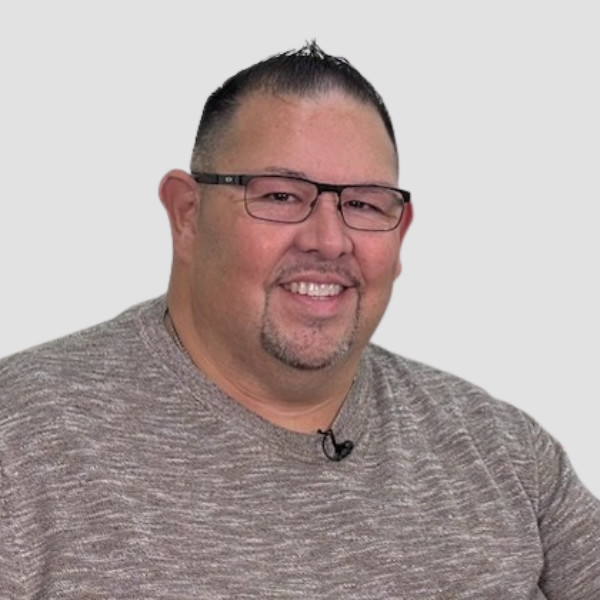
Santi co-founded Personna Employment Solutions with Chuck Colmenero in June 2022. His degree is in HR, and he started his career as a recruiter. He was Chuck's staffing manager at Barrett before they launched Personna together.

Paul DeLuca
Paul founded Meritus Capital and has worked with more than 800 staffing companies over the course of his career. He specializes in helping staffing owners through mergers, acquisitions and periods of rapid growth, and brings that experience to every conversation on The Growth Game.
Growing faster than your cash flow?
Meritus Capital has funded staffing companies for more than 20 years. If you're scaling fast and need the capital to back it, we're here to help.